
For three Christmases in a row I made the same mistake. I baked my grandmother's sugar cookies on bare metal pans, crossed my fingers, and pulled out a tray where the bottoms ranged from pale and doughy to the color of charcoal. The tops looked fine. The bottoms told a different story. I tried lower temperatures, longer times, different rack positions. Nothing clicked. I told myself maybe I just wasn't a cookie person, which is a terrible thing to think when you love to bake.
Then a coworker mentioned she'd been using the Amazon Basics silicone baking mat for about a year and had basically stopped thinking about burnt bottoms entirely. She said it so casually, like it was obvious. I went home that night and ordered one. It was under twelve dollars. I felt a little foolish that I hadn't tried it sooner, but also curious whether a piece of non-stick silicone was really going to solve a problem I'd wrestled with for years.
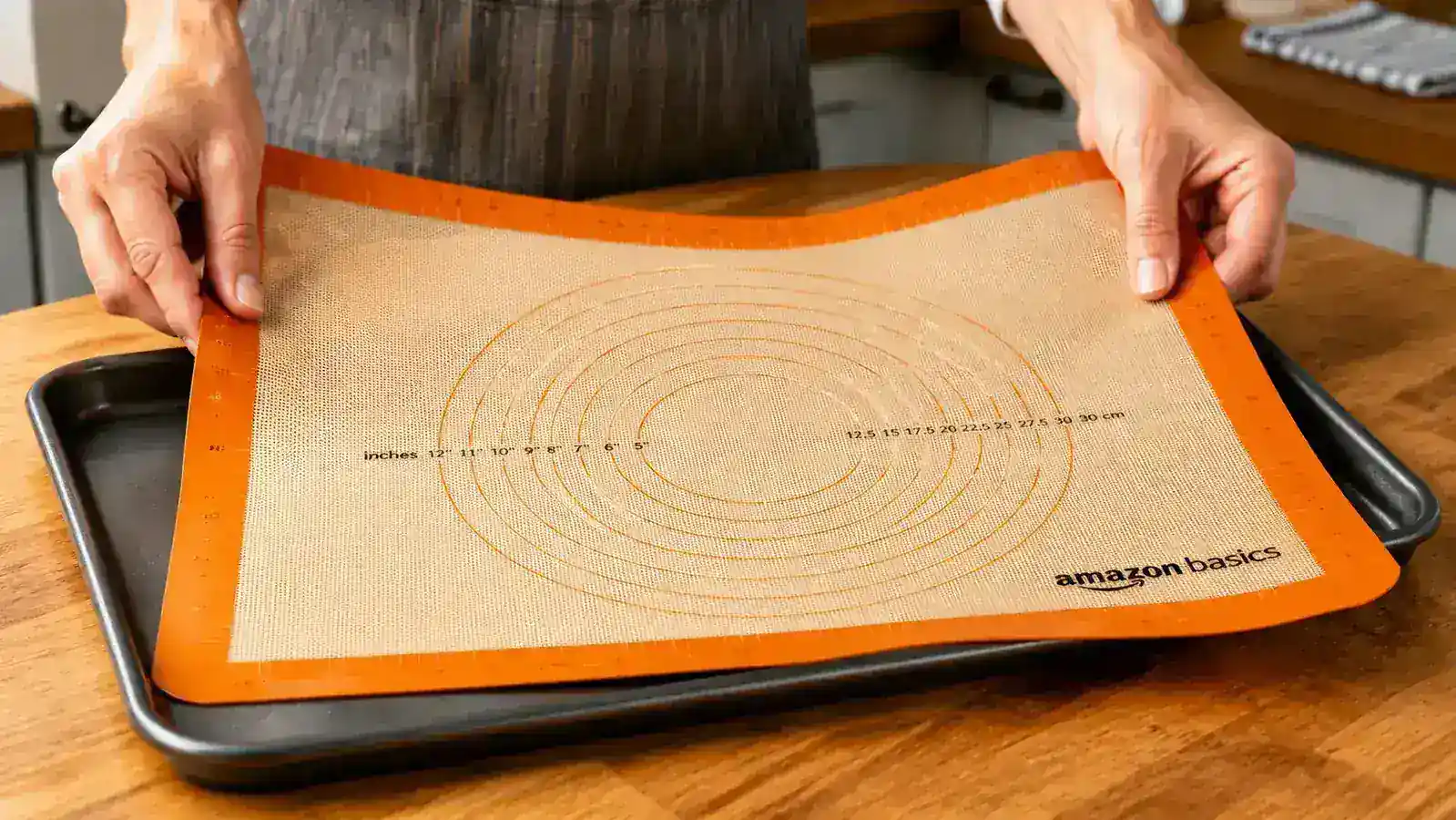
When it arrived I pulled it out of the package and laid it flat on my half-sheet pan. It fit almost exactly, with just a small gap at one end. There are printed measurement guides on the surface, which I did not expect at that price. I ran my thumb across it. Smooth, a little tacky, nothing like the slippery quality I associate with cheap kitchen tools. It felt substantial. I preheated the oven to 350 and mixed up a simple batch of chocolate chip cookies to test it.
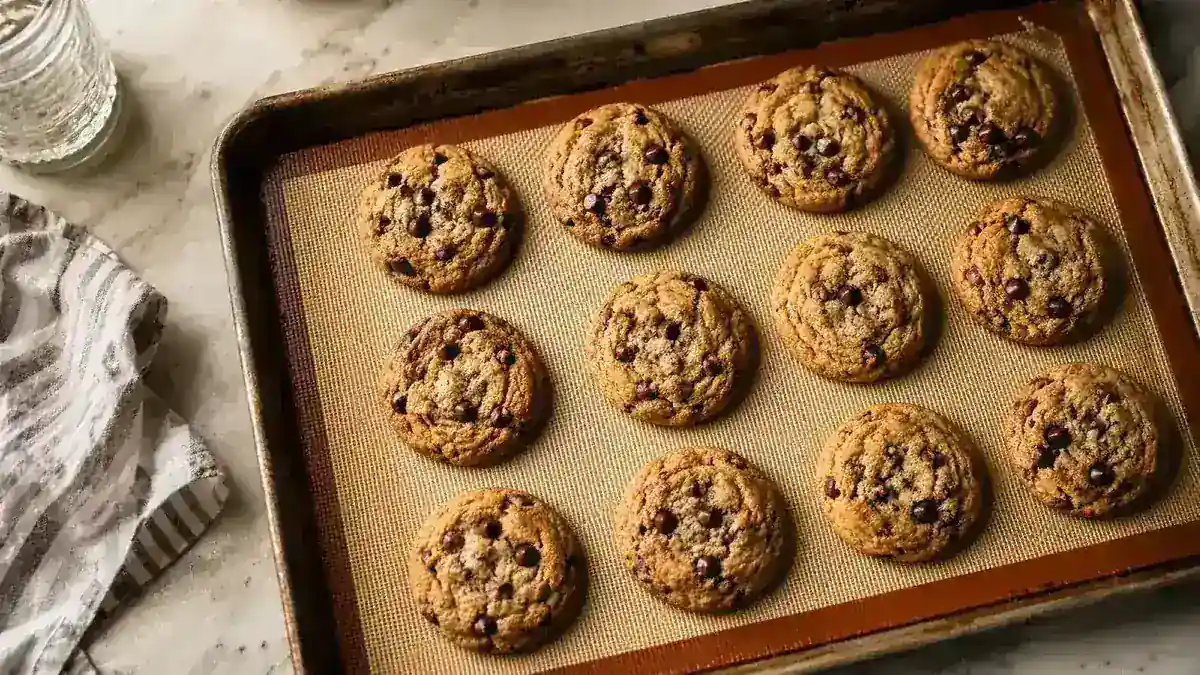
The result was the most boring baking success I have ever had. I say boring as a compliment. The cookies baked evenly. Every single one on that tray came out the same shade of golden on the bottom, no dark spots, no pale centers. I did not have to rotate the pan. I did not have to pull them early and hope for the best. They just baked the way cookies are supposed to bake, and I have no dramatic story because nothing went wrong.
Ready to stop fighting your oven? This is what fixed it for me.
The Amazon Basics silicone baking mat is the tool I wish someone had pointed me toward years ago. It fits a standard half-sheet pan, handles temperatures up to 480 degrees, and cleans up in about thirty seconds.
Amazon Check Today's Price on Amazon →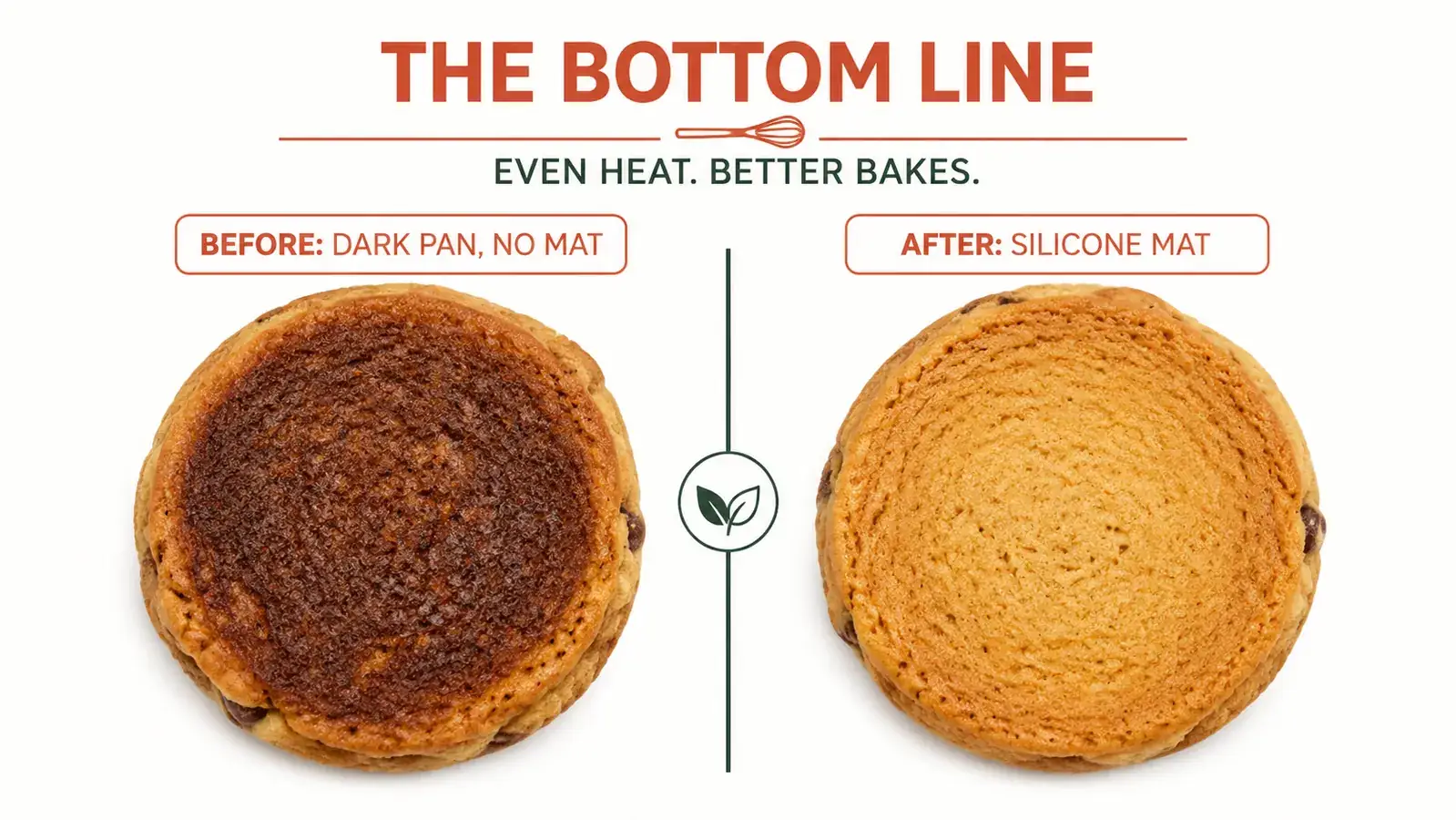
I kept using it over the next several weeks, first for cookies, then for roasted vegetables, then for reheating leftover pizza because I was curious. Carrots came out caramelized without sticking. Pizza crust crisped up without drying out. I started to understand why people call these mats indispensable once they try one. The silicone distributes heat differently than bare metal, more gently and evenly, and that changes the texture of whatever you're cooking in a way that is genuinely hard to explain until you see it.
The cookies just baked the way cookies are supposed to bake. I have no dramatic story because nothing went wrong.
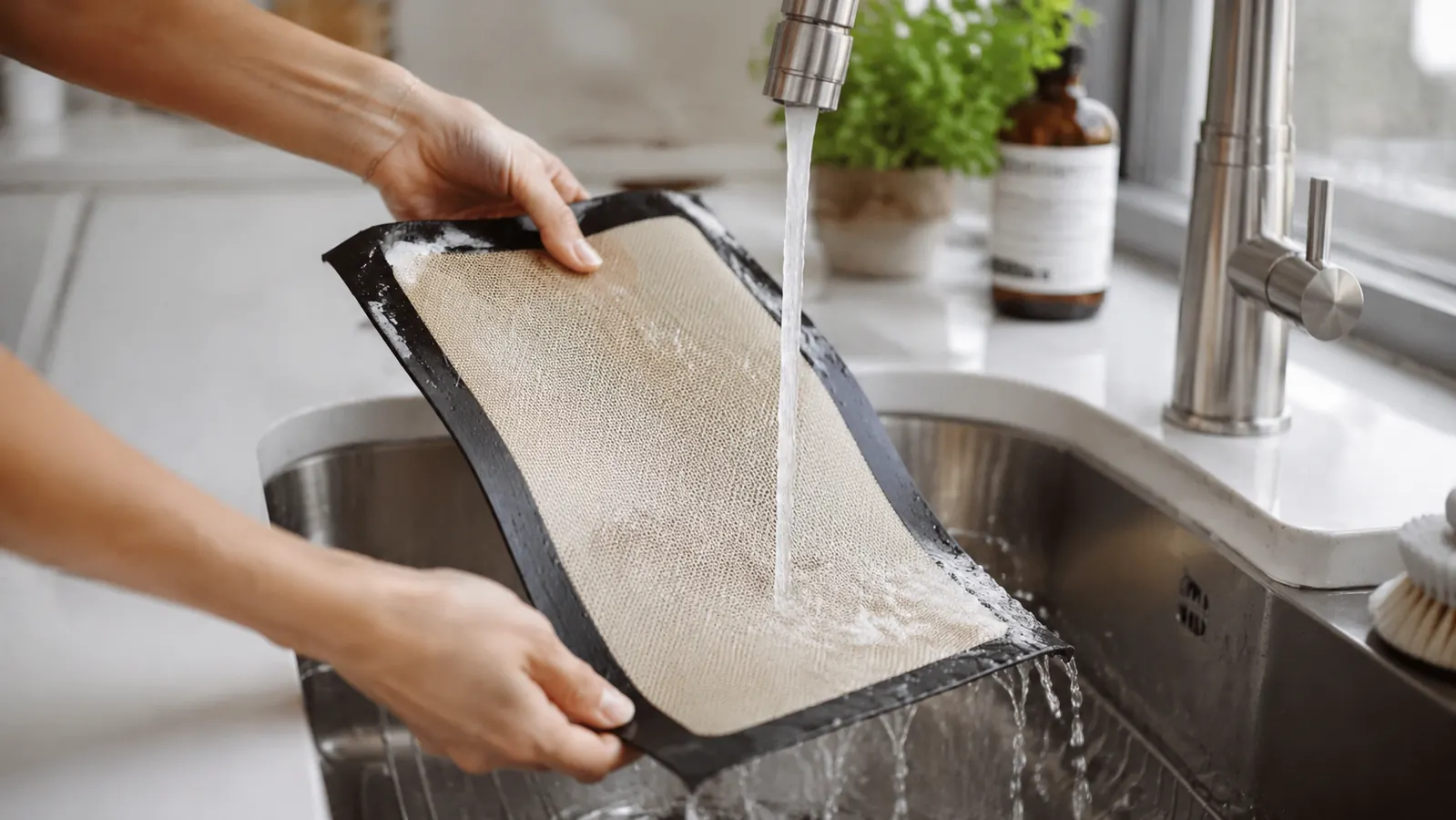
Cleanup is where I became a true believer. I used to hate washing baking pans because the browned sugar residue requires soaking and scrubbing. With the mat, I rinse it under warm water, hit any sticky spots with a drop of dish soap, and it's done. The whole process takes maybe twenty seconds. The pan underneath is barely dirty because nothing ever touches it directly. I have run the mat through the dishwasher twice on the top rack and it came out fine, though I usually just hand rinse because it is honestly that easy.
There are a few things worth mentioning honestly. The mat does not grip the pan underneath. On a perfectly flat surface it stays put, but if you tilt the pan quickly the mat can slide a little. It also has a faint rubbery smell the first few times you use it at high heat, nothing alarming but noticeable. Both issues went away after a handful of uses. I also noticed the mat is not totally non-stick with very high-sugar recipes like brittle or caramel. For everyday cookies, roasted produce, and bread rolls it performs exactly as promised.
I've been using mine for about four months now. It has not warped, cracked, or lost any of its non-stick quality. I have used it at temperatures as high as 425 degrees with no issues. For what it costs, the durability is genuinely impressive. I bought a second one so I could run two pans at once during the holidays, which felt like the kind of sensible small purchase that actually improves your cooking life rather than just adding to the drawer clutter.
What I Would Tell You If We Were Sitting at My Kitchen Table
If you have been blaming yourself for uneven baking results, stop. Chances are the problem is the pan, not you. Dark metal pans absorb heat fast and unevenly, and there is only so much technique can do to compensate. A silicone mat interrupts that process and gives you a buffer between the heat and your food. It is not a magic solution, but it is close to one for the specific problem of burnt bottoms and inconsistent browning.
I am not the kind of person who buys kitchen gadgets easily. My rule is that something has to earn its drawer space before I keep it, meaning it has to solve a problem I actually have and do it well enough that I reach for it repeatedly. The Amazon Basics silicone baking mat passes that test easily. It is one of maybe six things on my baking shelf that I consider non-negotiable now. If you bake even occasionally, this mat will change how you think about your oven, and at this price point there is genuinely no reason to wait.
Still baking on bare metal? Your cookies deserve better.
Under twelve dollars, fits a standard half-sheet pan, cleans in twenty seconds. This is the one small purchase that changed how I bake every week.
Amazon Check Today's Price on Amazon →