
I use garlic in dinner almost every single night. Pasta, stir-fry, roasted vegetables, marinades, soup stock -- if it is savory, garlic is probably in it. For the first several years of cooking this way I minced by hand, which worked fine until it didn't. The smell never fully washed off, the board needed a full scrub each time, and when I was in a hurry I cut the cloves unevenly and ended up with bitter burnt bits in the pan. A year ago I finally bought the OXO Good Grips Heavy Duty Garlic Press instead of another bargain-bin tool that would snap in six months, and I've been pressing cloves with it ever since. This is what I learned after twelve months of actual daily use.
The Quick Verdict
A genuinely well-built garlic press that handles unpeeled cloves cleanly, rinses fast, and shows no mechanical wear after a full year of nightly cooking -- with one real gripe about larger cloves.
Amazon Check Today's Price →Tired of garlic smell on your hands and uneven mince on your board every night?
The OXO Good Grips garlic press handles unpeeled cloves and rinses under the tap in about ten seconds. Over 37,000 ratings back it up. Check today's price on Amazon before it moves.
Amazon Check Today's Price on Amazon →How I've Used It
My usual routine is three to four cloves per dinner, five or six nights a week. Over twelve months that is somewhere between 900 and 1,200 individual cloves pressed through this tool. I cook on a gas range, so the press goes from drawer to stovetop and back again quickly. I store it in the utensil drawer, not hung up, so it gets tossed around. I run it through the dishwasher maybe twice a month and rinse it by hand the rest of the time.
I cook mostly Italian, Thai, and a lot of roasted sheet-pan meals. Garlic texture matters differently in each. For a quick aglio e olio I want very fine mince that basically dissolves into the olive oil. For a Thai stir-fry I want it a bit coarser so it caramelizes with some texture. A garlic press is not infinitely adjustable in that way, but the OXO's die plate produces a consistent medium-fine mince that works well across most of what I make.
I also tested it occasionally on ginger, which works surprisingly well if the piece is small enough to fit the hopper. That is a bonus, not a selling point, but worth knowing.
Build Quality and Mechanism: Die-Cast Zinc Holds Up
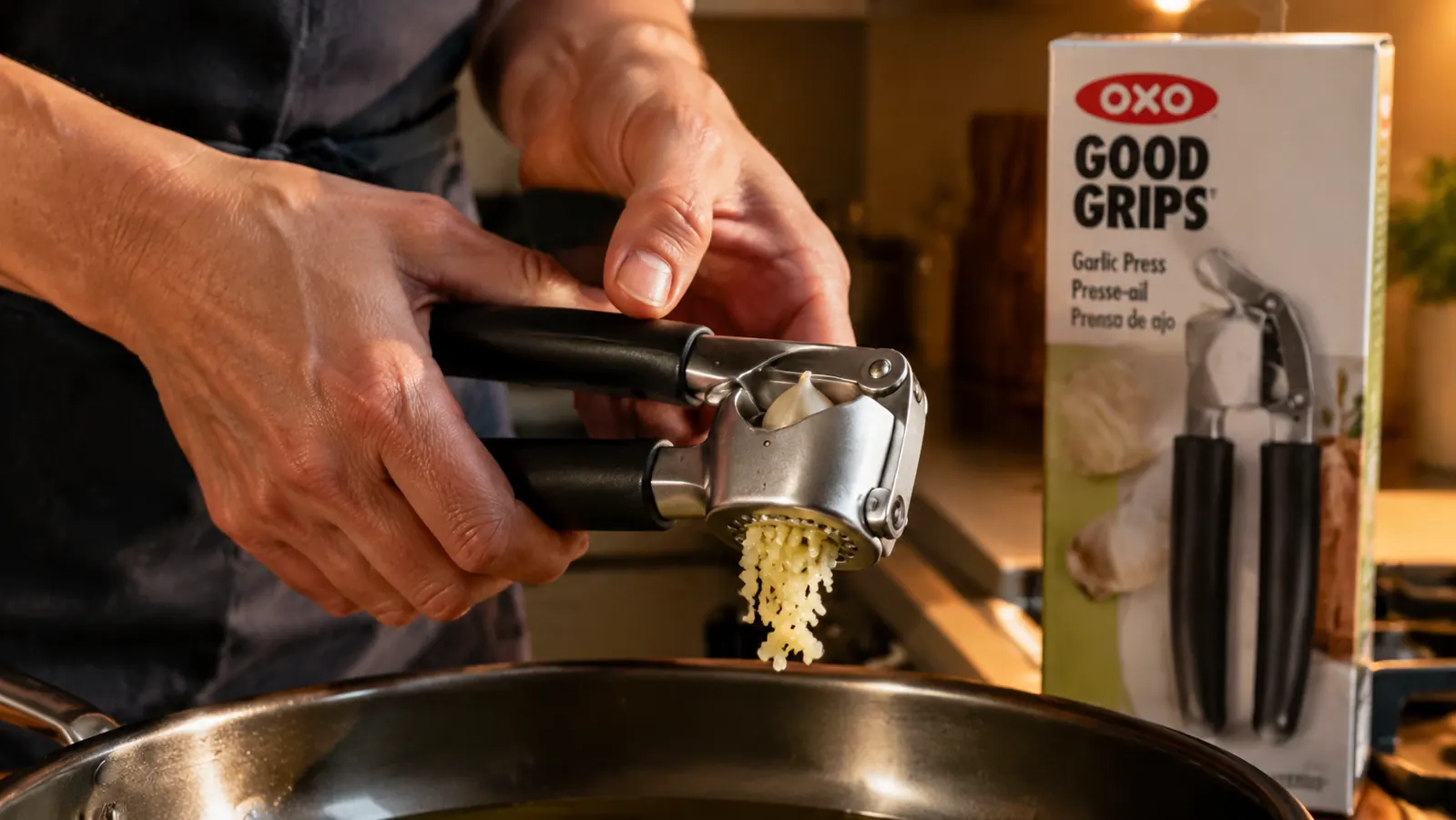
The OXO is made from die-cast zinc with a zinc hopper and die plate, and the handles are coated in that familiar soft OXO grip rubber. After a year the rubber shows no peeling, no stickiness from dish soap, and no cracking at the flex points where the handles meet the body. The hinge pivot feels exactly as tight as it did when I bought it. I have owned cheap garlic presses that started wobbling at the hinge within a few months; this one has not budged.
The pressing mechanism uses a pivoting hopper plate that pushes the clove through the die. You can feel it is a mechanical advantage design, meaning the handle geometry multiplies your force so even a firm, slightly dry clove does not require a white-knuckle squeeze. My mother-in-law, who has mild arthritis in her grip, borrowed it at Thanksgiving and pressed six cloves without complaining, which is a meaningful data point. Lighter-grip presses tend to require more effort as the clove gets drier or the skin is tougher; the OXO stays manageable.
After 900-plus cloves, the hinge feels exactly as tight as day one. That is the single most important thing I can tell you about a garlic press.
The No-Peel Feature Is Real and Saves More Time Than You Expect
The biggest reason people pay more for a garlic press rather than buying the cheapest one on the shelf is the no-peel claim. Cheaper presses require you to peel the clove first, or the skin gums up the holes and you get patchy, uneven output. The OXO handles unpeeled cloves cleanly. The skin stays behind in the hopper, the minced garlic comes through the die plate, and you pop the skin out when you rinse it. I have tested this on fresh California garlic, pre-bagged peeled cloves, and those large elephant garlic cloves, and it works consistently on the first two.
The exception is very large elephant garlic cloves, which are sometimes too big to fit the hopper in one piece. You can cut them in half and press each half, which is a minor workaround. Standard grocery store garlic, whether loose-bulb or pre-packaged, fits without modification every time. If you buy elephant garlic regularly, just know about that quirk before you buy.
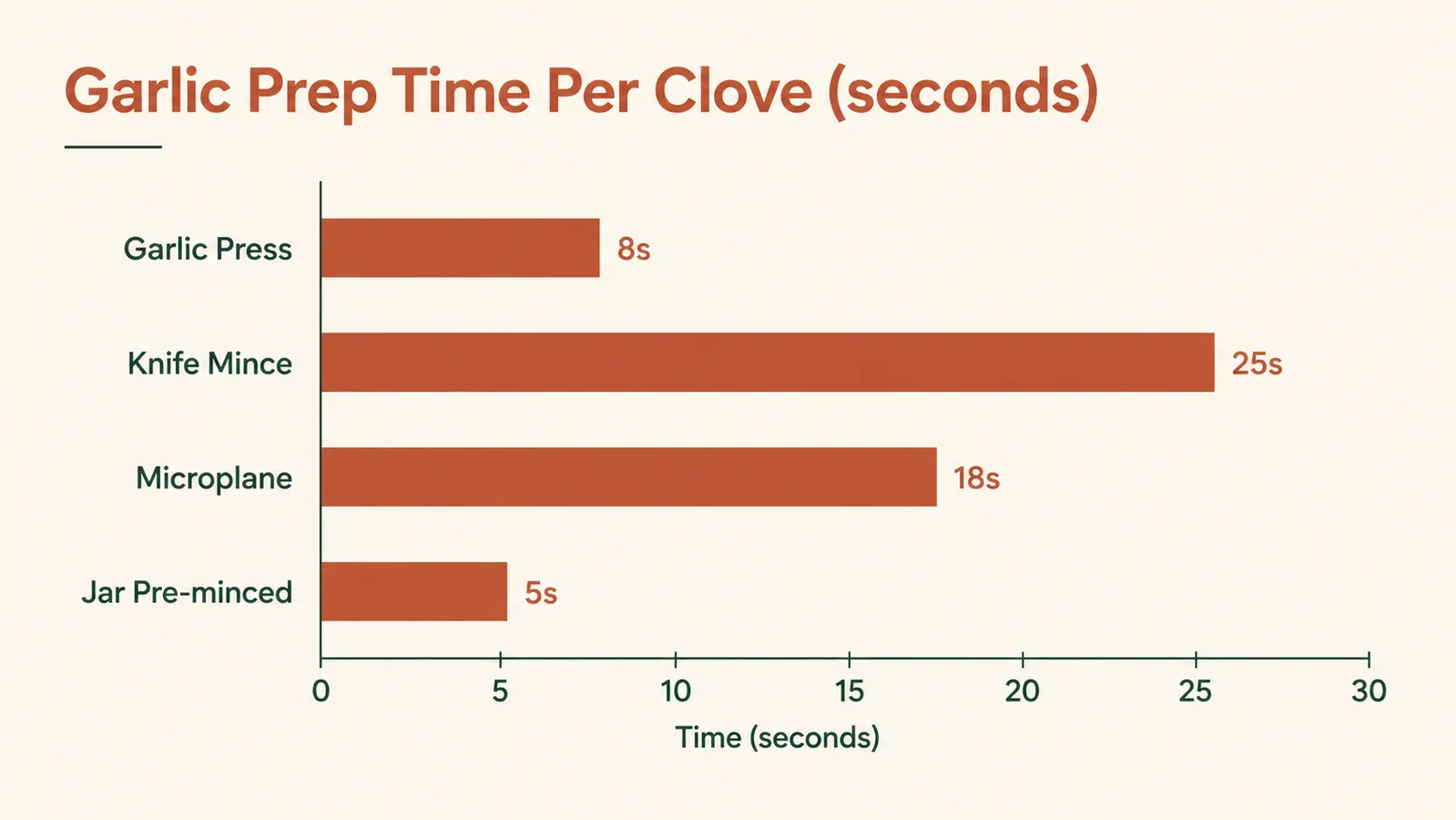
The time savings from skipping peeling are real but modest on a per-clove basis -- maybe fifteen to twenty seconds. Across four cloves every night for a year, that adds up to a few hours back in your life, which sounds absurd until you are already late getting dinner on the table and the garlic is the only thing slowing you down.
Cleanup: The Built-In Cleaner Actually Works
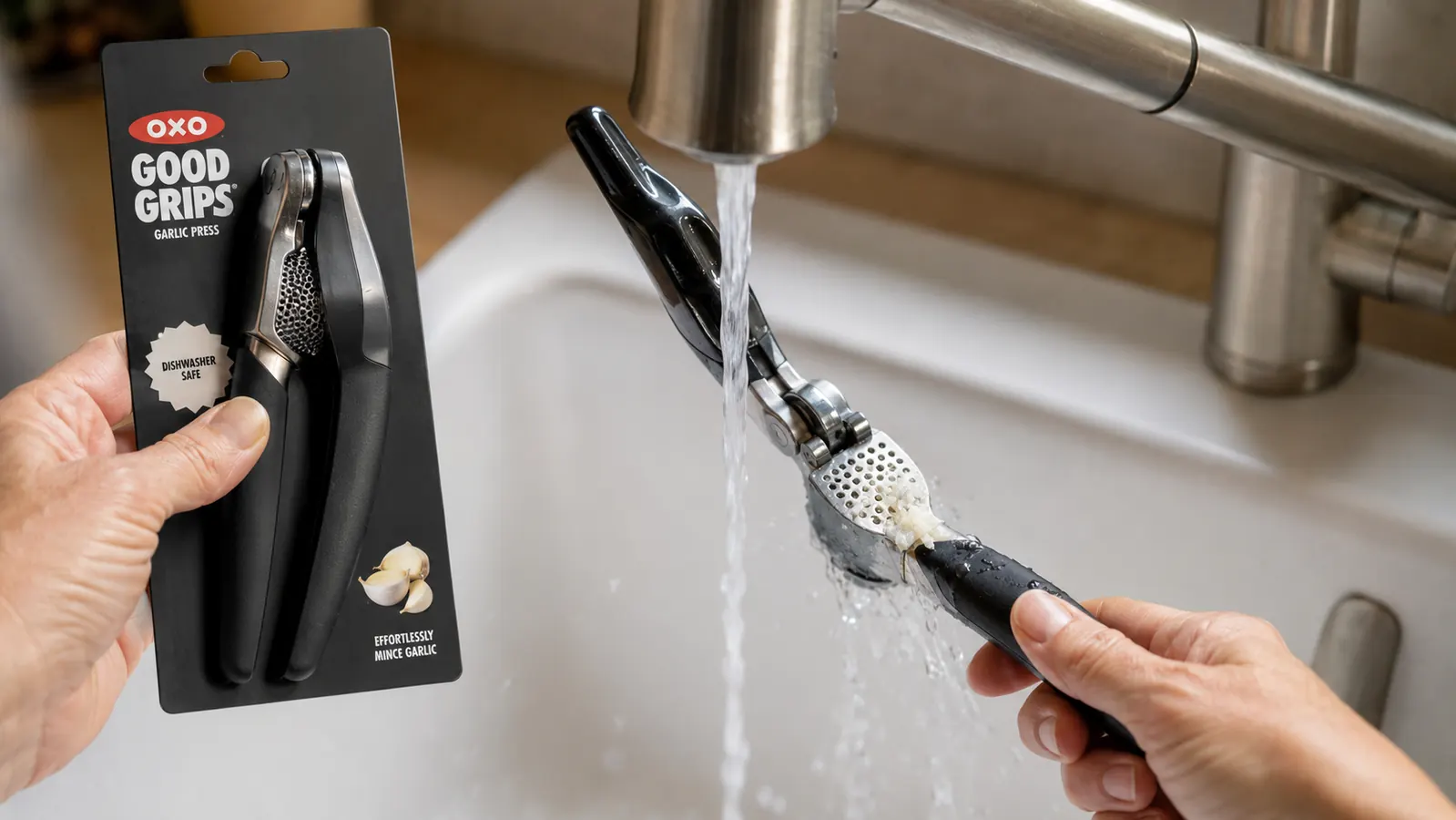
Garlic press cleanup is where cheap tools lose me. The holes clog with pulp and skin, and you either spend two minutes with a toothpick or you give up and throw it in the dishwasher and hope the cycle handles it. OXO solved this with a small cleaning nub mechanism built into the back of the press. When you open the press fully, a row of rubber cleaning pins extends through the die plate from the hopper side, pushing trapped bits back out of the holes. It is not magic, but it reduces hand-rinsing time significantly.
My routine is to rinse the press under running water immediately after pressing, with the cleaning pins engaged. That takes about ten seconds and leaves the die plate clean enough to go straight back in the drawer. About twice a month I run it through the dishwasher for a deeper clean. After a year the die plate shows no staining, no build-up, and no corrosion. The rubber cleaning pins have not deformed or pulled loose from their mounting.
One honest note: if you let the pressed garlic dry on the die plate, cleanup takes longer. Garlic dries hard and the cleaning pins struggle with fully dried residue. The fix is simple -- rinse it while it is still wet. That is a user habit, not a design flaw, but I mention it because it catches people off guard.
Output Quality: Fine Enough for Pasta, Coarse Enough for Stir-Fry
The die plate has small, evenly-spaced holes that produce a fairly fine mince. It is not a paste like you get from a microplane, and it is not the rough chop you get from a knife. It lands somewhere in between: fine enough to dissolve into butter or olive oil without leaving detectable chunks, but textured enough that it browns with some surface area visible. For most everyday home cooking, that is exactly what you want.
If you are making something like a French aioli where you need an ultra-smooth garlic paste, a microplane or mortar and pestle will serve you better. The OXO press leaves a bit more texture than those methods. But for 95 percent of weeknight cooking, the output is ideal and far more consistent than my hand-mincing ever was.
I also noticed that the output volume is better than I expected. Cheap presses leave a lot of garlic behind in the hopper as waste. The OXO extracts most of the clove before the remaining skin-and-pulp disk stops yielding anything useful. Over hundreds of cloves the waste difference is real.
What I Liked
- Handles unpeeled cloves cleanly -- no peeling step required
- Die-cast zinc body and hinge show no wear after one year of heavy use
- Built-in cleaning pins reduce rinse time to about ten seconds
- Soft-grip handles make pressing comfortable even with mild arthritis
- Consistent medium-fine mince that works across pasta, stir-fry, marinades, and soups
- Dishwasher safe with no corrosion or discoloration after a year
Where It Falls Short
- Very large elephant garlic cloves are too big for the hopper and need to be halved first
- Dried-on garlic is harder to clean than most reviews admit -- rinse it fresh or it sticks
- Not the right tool if you need ultra-smooth paste (use a microplane instead for aioli or compound butter)
How It Compares to What Came Before It
Before the OXO I had two other garlic presses. The first was a chrome-plated model that cost around eight dollars at a discount kitchen store. It required peeled cloves, the hinge wobbled after about three months, and the chrome started flaking where it met the garlic acid. I threw it out. The second was a silicone-handled press from a brand I will not name; it pressed fine but the hopper was smaller than the OXO's, so large cloves needed quartering, and the cleanup was awful because there was no cleaning mechanism at all.
The OXO costs more than either of those -- the current price sits in the moderate range. What you get for that extra money is a tool that still functions identically to day one after a year of use, which is something neither of those cheaper presses could claim. If you cook garlic two or three times a week, the OXO will likely outlast two or three cheaper presses over the same span of time.
The Zyliss press and the Kuhn Rikon model sit in a similar price bracket and come up whenever the OXO does in comparison discussions. Both are solid options. The Zyliss has a rotating hopper that some cooks prefer; the Kuhn Rikon is slightly lighter. I chose the OXO because the grip handle design is better for extended sessions (like prepping garlic for a big batch of tomato sauce), and because OXO's quality control reputation over the years has been consistent. That said, any of the three would serve most home cooks well.
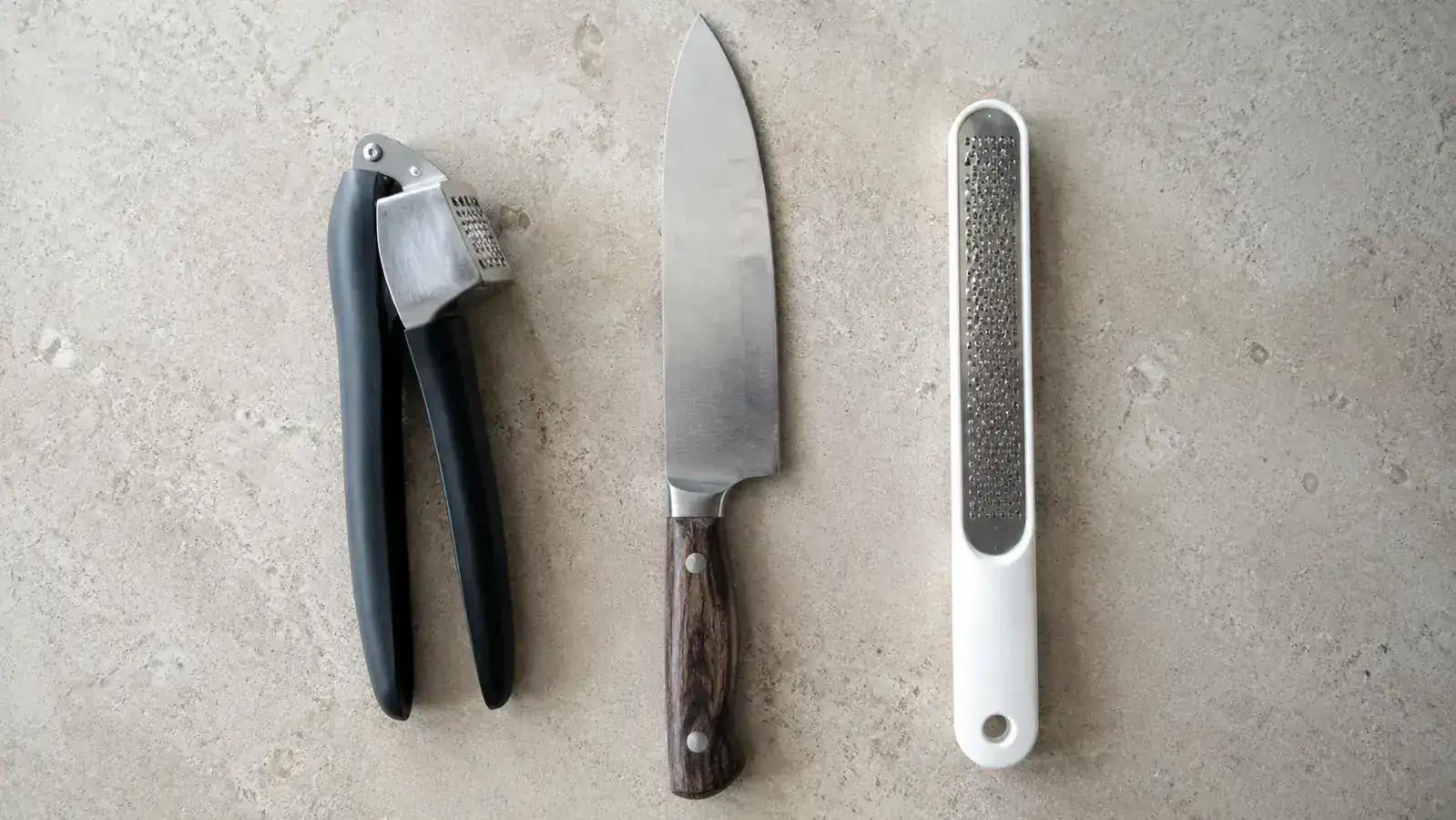
Who This Is For
The OXO Good Grips garlic press is the right tool if you cook garlic four or more nights a week and want to stop peeling cloves by hand before pressing. It is also a good fit if you have any grip strength issues -- the handle design and mechanical leverage make it noticeably easier than squeeze-style presses. If you like to batch-cook and often press six or more cloves at a time, the larger-than-average hopper means fewer reloads. And if you want a tool that will still be working in two or three years without a replacement, the die-cast zinc construction delivers that.
Who Should Skip It
If you only use garlic occasionally and have a good knife, the manual mince is fine and you do not need this at all. If you cook primarily French food where ultra-smooth garlic paste is the standard, a microplane or a mortar and pestle will produce a better texture for those specific recipes. If you grow elephant garlic at home and use it exclusively, the hopper sizing will frustrate you. And if you have a very small utensil drawer already crowded with single-use tools, consider whether a garlic press earns that slot before you buy -- though a tool you reach for every night earns more slot credit than most.
If you cook garlic most nights, this press pays for itself in the first week.
The OXO Good Grips garlic press works on unpeeled cloves, rinses clean in seconds, and has held up through a year of nightly use without any mechanical wear. With over 37,000 ratings at 4.7 stars, the track record is hard to argue with. Check current pricing on Amazon -- it tends to move.
Amazon Check Today's Price on Amazon →