
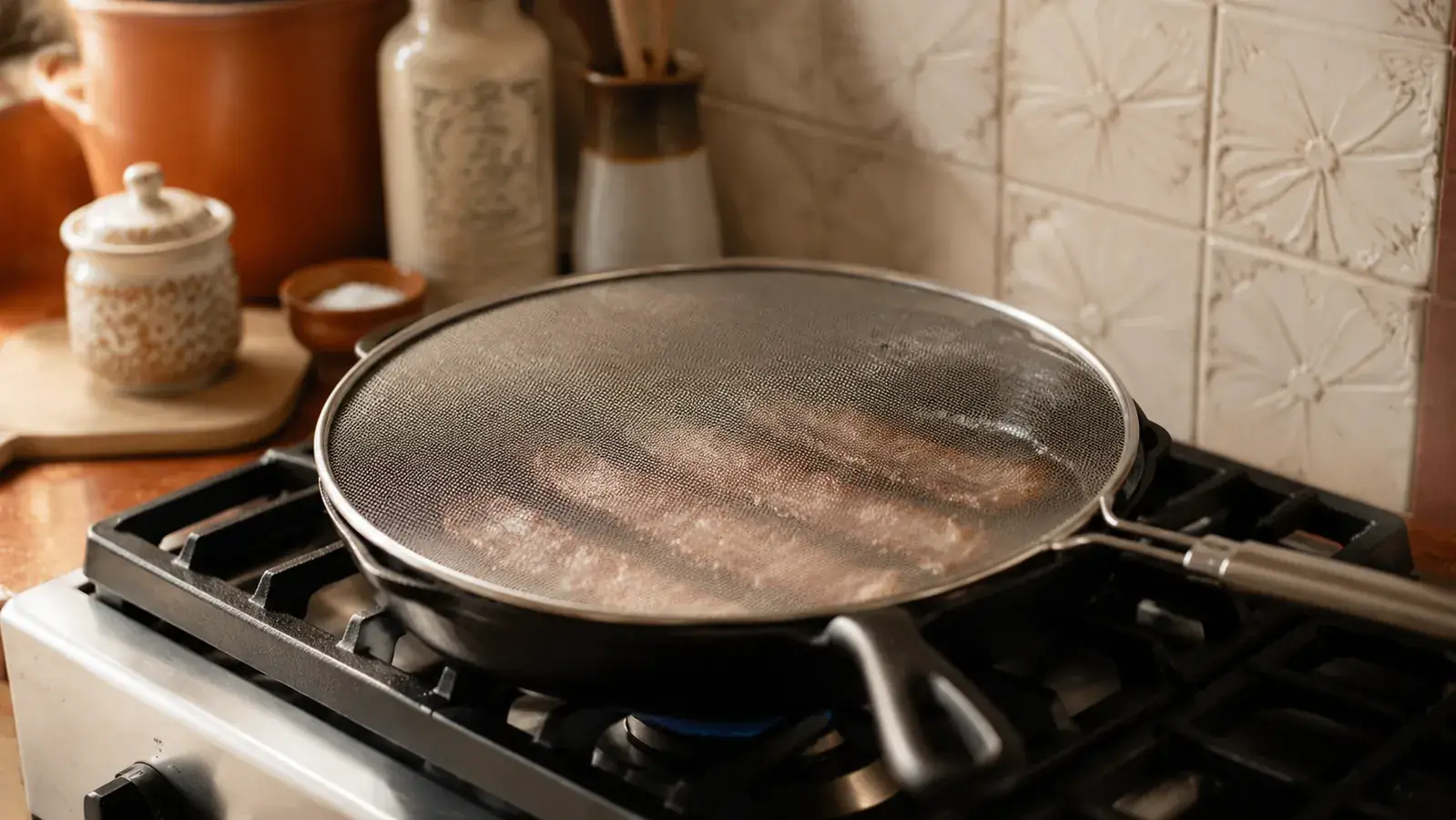
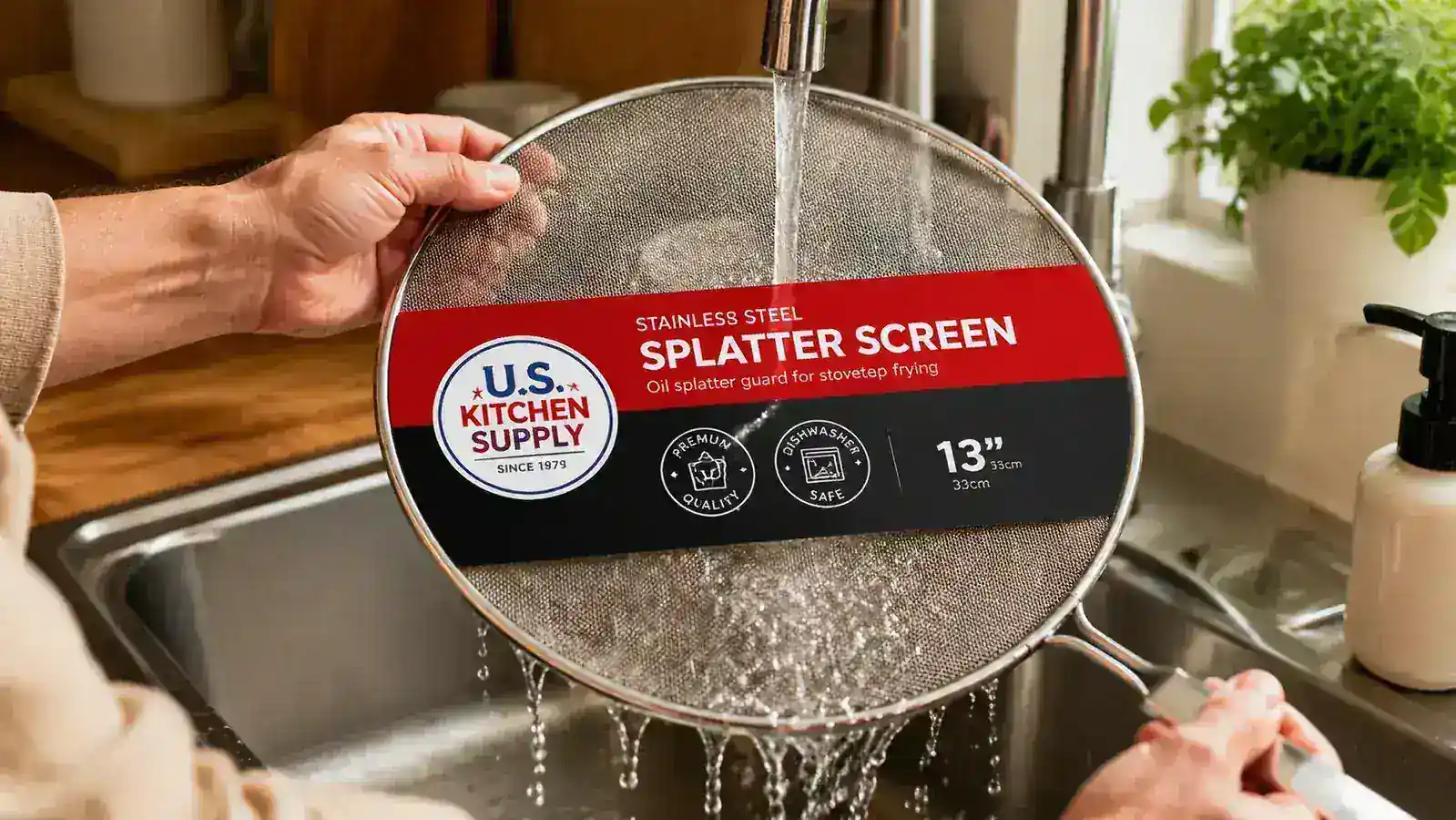
My stovetop used to be a crime scene every time I fried anything. Bacon on a Sunday morning meant wiping down the burner grates, the stove surface, the backsplash, and somehow the cabinet above. I was spending ten minutes cleaning up after every five-minute cook. I tried putting a lid on the pan. The steam made everything soggy and the crispy texture I was going for vanished. I kept looking for a real answer, and eventually I landed on the U.S. Kitchen Supply Set of 3 Stainless Steel Splatter Screens, covering 13, 11.5, and 9.5 inches. That was several months ago. I have used them on nearly every fry job since, from searing chicken thighs to cooking ground beef to frying eggs in butter. This is an honest account of how they held up.
The Quick Verdict
Solid, fine-mesh stainless screens that genuinely stop grease splatter, come in three useful sizes, and clean up in seconds. The handles get warm, and high-fat cooks need a prompt rinse before grease sets in the mesh. Worth every cent for anyone who fries regularly.
Amazon Check Today's Price →Tired of wiping grease off your backsplash after every cook? This set fixes that.
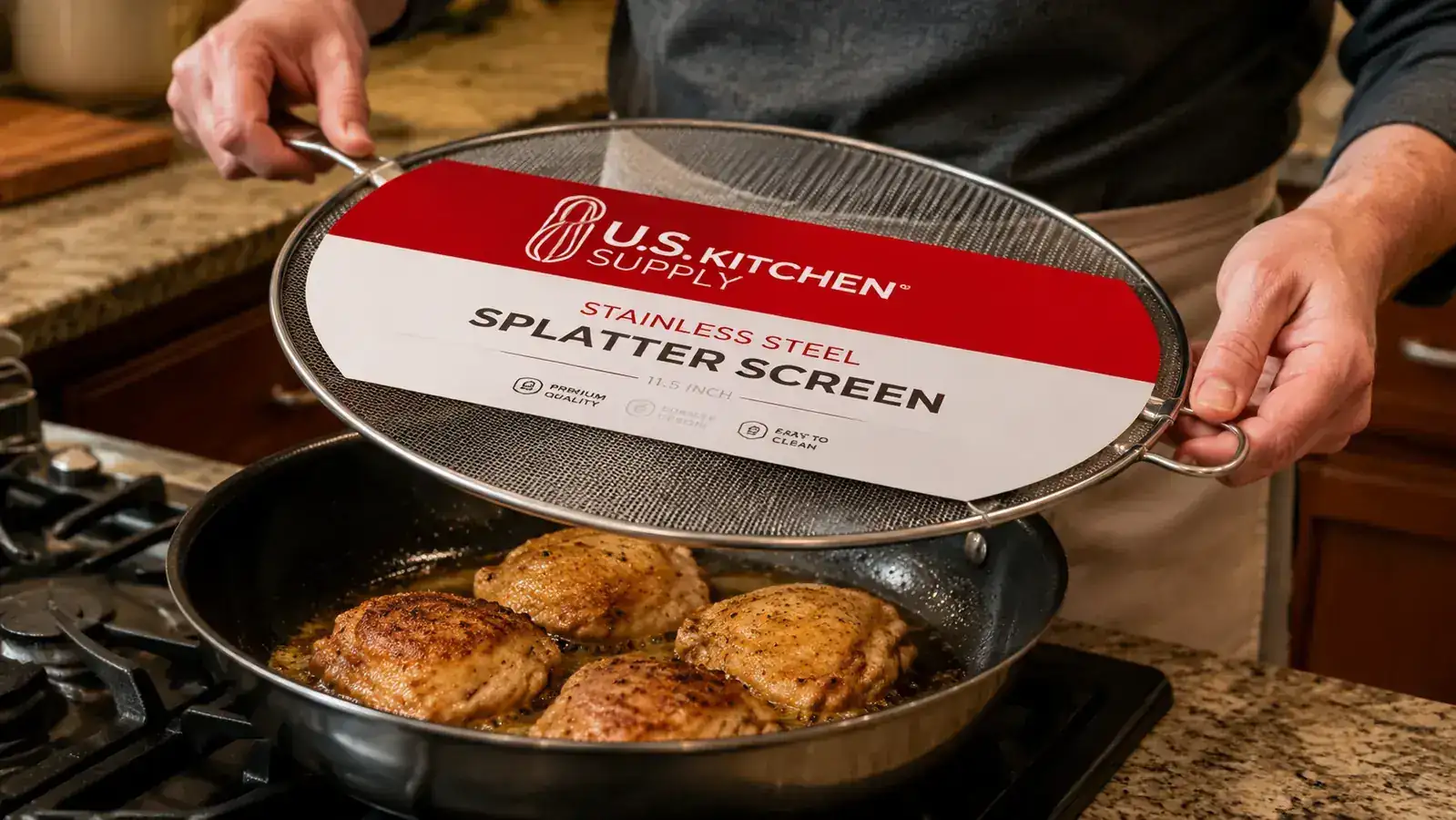
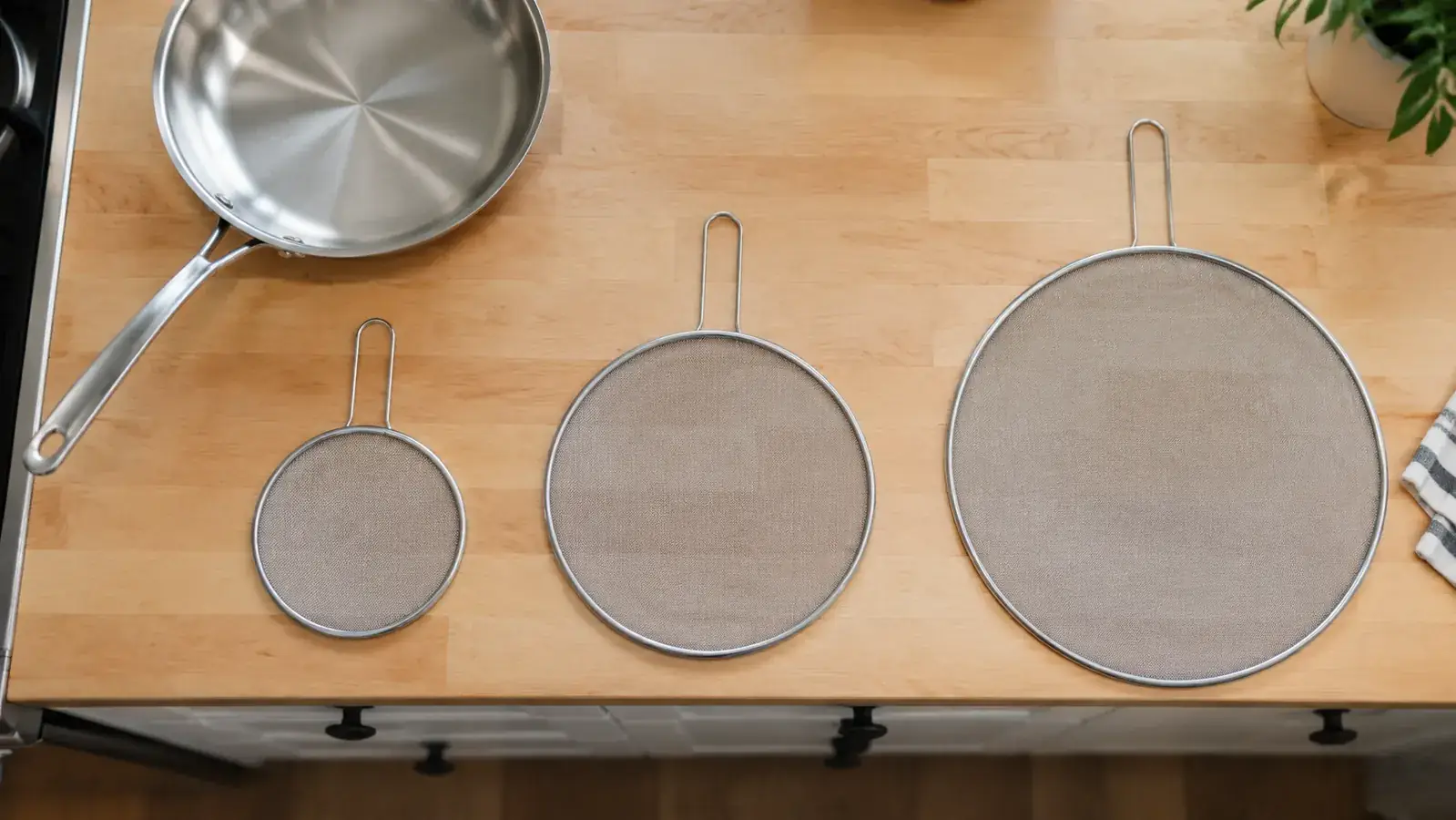
The U.S. Kitchen Supply 3-piece stainless splatter screen set covers 9.5, 11.5, and 13-inch pans. One purchase handles practically every pan in a home kitchen.
Amazon Check Today's Price on Amazon →How I've Used These Screens
I cook dinner six nights a week and usually make breakfast on weekends. That means the splatter screens get used hard, not occasionally. My daily driver is a 12-inch stainless saute pan, so the 13-inch screen is my workhorse. I reach for the 11.5-inch version on my 10-inch cast iron, and the 9.5-inch goes on the small nonstick when I am cooking eggs for one or rendering a little butter for garlic.
Over the testing period, I fried bacon at least twice a week, seared bone-in chicken thighs two or three times a month, browned ground beef and Italian sausage regularly, and cooked eggs on high heat more times than I can count. I also used the screens when making pan sauces after a sear, because even deglazing with wine or stock can spit at you if the pan is still screaming hot. The screens were in play for almost all of it.
To keep the comparison honest, I cooked the same dishes with and without the screen on separate nights, then clocked how long cleanup took each time. The difference was not marginal. It was the kind of difference that makes you wonder why you ever cooked without one.
Grease Control: How Well Does the Fine Mesh Actually Work?
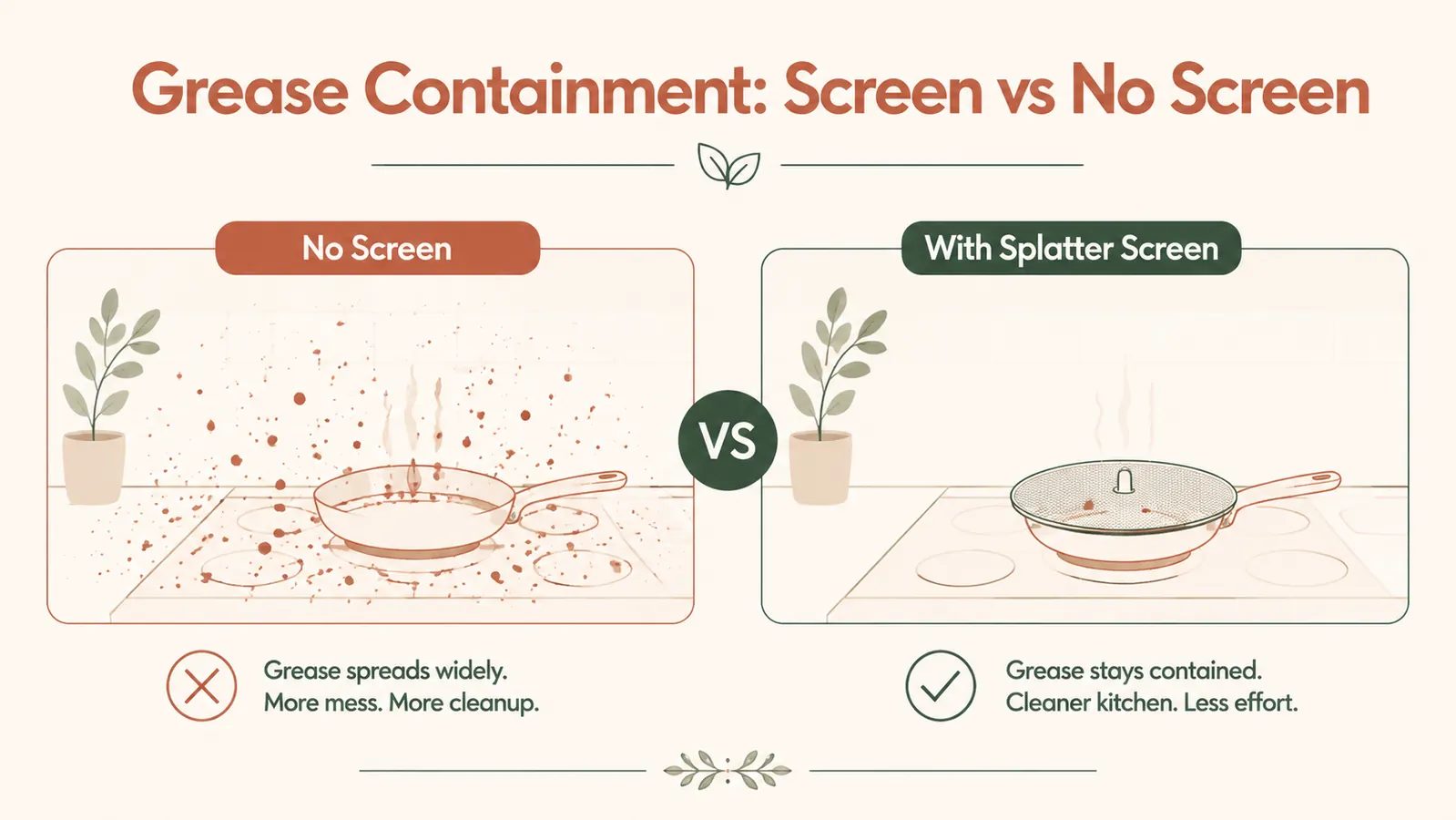
The mesh on these screens is tighter than most cheap single-screen sets I have tried. When I lay the 13-inch screen over a pan of sizzling bacon, the grease that would normally dot the stovetop, the side of the range, and the backsplash in a wide arc stays contained. I still get a small amount of microscopic mist that drifts beyond the screen edge at very high heat, but the dramatic splatter events that used to coat a twelve-inch radius around my pan simply stop happening.
Chicken thighs are the real test. Skin-on thighs in a ripping hot pan produce aggressive bursts of rendered fat. Without a screen, I can hear individual droplets hitting the burner grates. With the U.S. Kitchen Supply screen in place, most of that energy is absorbed by the mesh and what little passes through falls straight back into the pan. After a full chicken sear with the screen on, I wiped the stovetop with a single paper towel and was finished. That used to take three or four passes and sometimes a second round with a degreaser.
One critical detail: the screens do not trap steam the way a lid does. Air still moves freely through the weave, which means food keeps browning and crisping instead of steaming in its own moisture. This is exactly what you want when frying bacon or building a crust on protein. The screen blocks grease while preserving the high-heat dry cooking environment. A lid gives you the opposite trade. If you have ever wondered why lidded frying makes bacon limp, this is why.
After a full chicken sear with the screen on, I wiped the stovetop with a single paper towel and was done. Without a screen, that same cook needed three passes and a degreaser.
Build Quality and Handle Heat After Months of Hard Use
The screens are rolled-edge stainless steel frames with welded flat-steel handles. The handles are a steel loop, not soft-touch silicone, which means they do transfer heat when you leave the screen on a pan over high heat for more than a few minutes. They are not dangerously hot, but they are warm enough that I grab them with a folded dish towel or oven mitt after a long cook. If you are used to silicone-handled stovetop tools, the bare metal handle will feel like a step back. For me it has not been a real problem, but I am naming it plainly because it surprises some people.
After several months of daily use, including stacking the screens while still warm and occasionally knocking them around in a cabinet, the mesh is intact and flat on all three sizes. I have not seen any buckling, warping, or broken mesh wires. The frames show minor scratches from contact with other pans and utensils, which is purely cosmetic. The welded joints at the handle base look as solid as they did the day the set arrived.
Sizing is accurate and generous. The 13-inch screen covers both my 12-inch and 11-inch pans with a comfortable overlap that catches edge splatter from the sides. The 9.5-inch fits neatly over a standard 8-inch egg pan with room to spare. The one gap in coverage is for very large pans at 14 inches or wider. If that describes your primary frying surface, measure before you buy.
Cleanup Reality: The Part Nobody Talks About
Stainless mesh and bacon grease do not naturally repel each other. Fat gets into the weave during a heavy cook, and how easy it is to remove depends almost entirely on when you rinse. If you rinse the screen while it is still warm from the stove, hot water and a quick pass of dish soap cuts right through. The whole thing takes about thirty seconds. I have made cleanup part of my routine: screen comes off the pan, goes directly under hot running water, one pass with the sponge, done.
I made the mistake early on of leaving a greasy screen in the sink while I sat down to eat. When I came back an hour later, the grease had hardened in the mesh and scrubbing it out took considerably longer. The lesson is simply this: rinse warm. Once you build that habit, cleanup is genuinely fast.
The screens are also listed as dishwasher safe, and I have run them through my machine several times. Top rack, delicate cycle. They came out clean and structurally unchanged. My personal preference is still the quick hand rinse because it takes less time than loading the dishwasher, but the dishwasher option works for anyone who batch-cleans after dinner. High-fat cooks like sausage or duck breast leave a slightly heavier residue in the fine mesh. A small drop of dish soap worked into the mesh with a soft brush or your fingertips clears it without drama, but it is one extra step compared to lighter cooking.
The Three Sizes: Do You Actually Need All of Them?
I expected to use the largest screen constantly and ignore the smaller ones. That is not what happened. The 9.5-inch screen gets pulled out more than I anticipated. It covers my 8-inch nonstick egg pan perfectly, and I reach for it when cooking two eggs, browning garlic in butter, or doing any quick high-heat job in a small pan. Having the right-sized screen matters because a screen that is too large gets tippy on a small pan and does not sit securely, which defeats the purpose.
The 11.5-inch is the middle child and gets the least use in my specific kitchen because most of my cooking happens on either the 12-inch or the 8-inch. But if you own a 10-inch skillet as your primary pan, that medium screen will be your main tool and you will use it constantly. Anyone who has cooked a couple of pork chops in a 10-inch pan knows how much grease can come off in the first few minutes of cooking. The medium screen handles it well.
Buying a three-screen set also means you do not end up in the situation where you grab the wrong size and have to make do. I used to own a single large screen from a different brand. It technically covered most of my pans, but it was always awkward on smaller pans and I stopped using it because the fuss outweighed the benefit. Having a set that actually fits each pan removes that friction entirely.
Alternatives I Considered Before Buying This Set
Before settling on this set, I looked at a few other options. The OXO Good Grips splatter screen is a single 13-inch screen with a silicone-ringed handle and a built-in steam vent hole. It is well made and the handle is more comfortable. But it costs more than this three-pack, it only comes in one size, and for someone who uses multiple pan sizes regularly it means you are always undercovered on small pans and awkwardly oversized on medium ones. The price-to-value argument for the single premium screen never penciled out for me.
I also tried a silicone-edged screen from a less-known brand for a few weeks. The mesh was coarser, which let more fine grease mist through, and the silicone rim collected residue in a groove that was genuinely annoying to clean. Stainless mesh with no soft-edged trap points turned out to be the right call for my cooking habits. If handle comfort is your priority above everything else, the premium single-screen route makes sense. If coverage and value are the priorities, this three-pack is the better answer.
What I Liked
- Fine-mesh stainless steel stops serious grease splatter from bacon, sausage, and skin-on poultry far better than coarse single screens
- Three sizes cover almost every pan in a standard home kitchen without hunting for the right fit
- Food browns and crisps normally because the mesh allows steam to escape, unlike a lid
- Dishwasher safe and quick to rinse by hand while still warm from the stove
- Frames and mesh held up to months of daily use without warping, buckling, or broken wires
- Stores flat and stacks neatly, taking far less drawer or cabinet space than a collection of bulky lids
Where It Falls Short
- Metal handles get warm during long cooks at high heat and need a dish towel or mitt to grab safely
- Fine mesh requires a prompt warm-water rinse after heavy-fat cooking or grease sets and cleanup takes longer
- Does not provide full coverage for pans wider than 13 inches
- Light surface scratches appear on the frame after regular stacking with other cookware, cosmetic only but noticeable
Who This Is For
This set is exactly right for anyone who fries or sautes regularly and is tired of the cleanup that follows. If bacon, sausage, ground meat, or skin-on poultry appear on your weekly dinner rotation, these screens will meaningfully cut your post-cook cleanup time. They are also a genuinely good fit for people who have tried covering the pan with a lid and found the food turned out steamed and soft instead of browned. The mesh solves that problem by letting vapor escape while stopping the grease. Budget-wise, a three-screen stainless set at this price point costs less than most single-screen options from premium kitchen brands, which makes it a straightforward decision for anyone who cooks more than twice a week.
Who Should Skip It
If your cooking is mostly roasting in the oven, poaching on the stovetop, or sauteing with very little oil at low heat, your splatter problem is probably minor and a screen set is not the tool that will transform your kitchen. Likewise, if your main frying pan is 14 inches or larger, the biggest screen in this set will not give you full edge-to-edge coverage. And if warm-handle metal bothers you enough to disrupt your cooking flow, look for a screen with a silicone-wrapped handle, knowing you will likely pay more for it.
Ready to stop scrubbing grease off your stovetop, backsplash, and burner grates after every fry?
The U.S. Kitchen Supply 3-piece stainless splatter screen set has been my stovetop daily driver for months and it still performs exactly as it did on day one. Three sizes, one low price, one less chore after every dinner.
Amazon Check Today's Price on Amazon →