
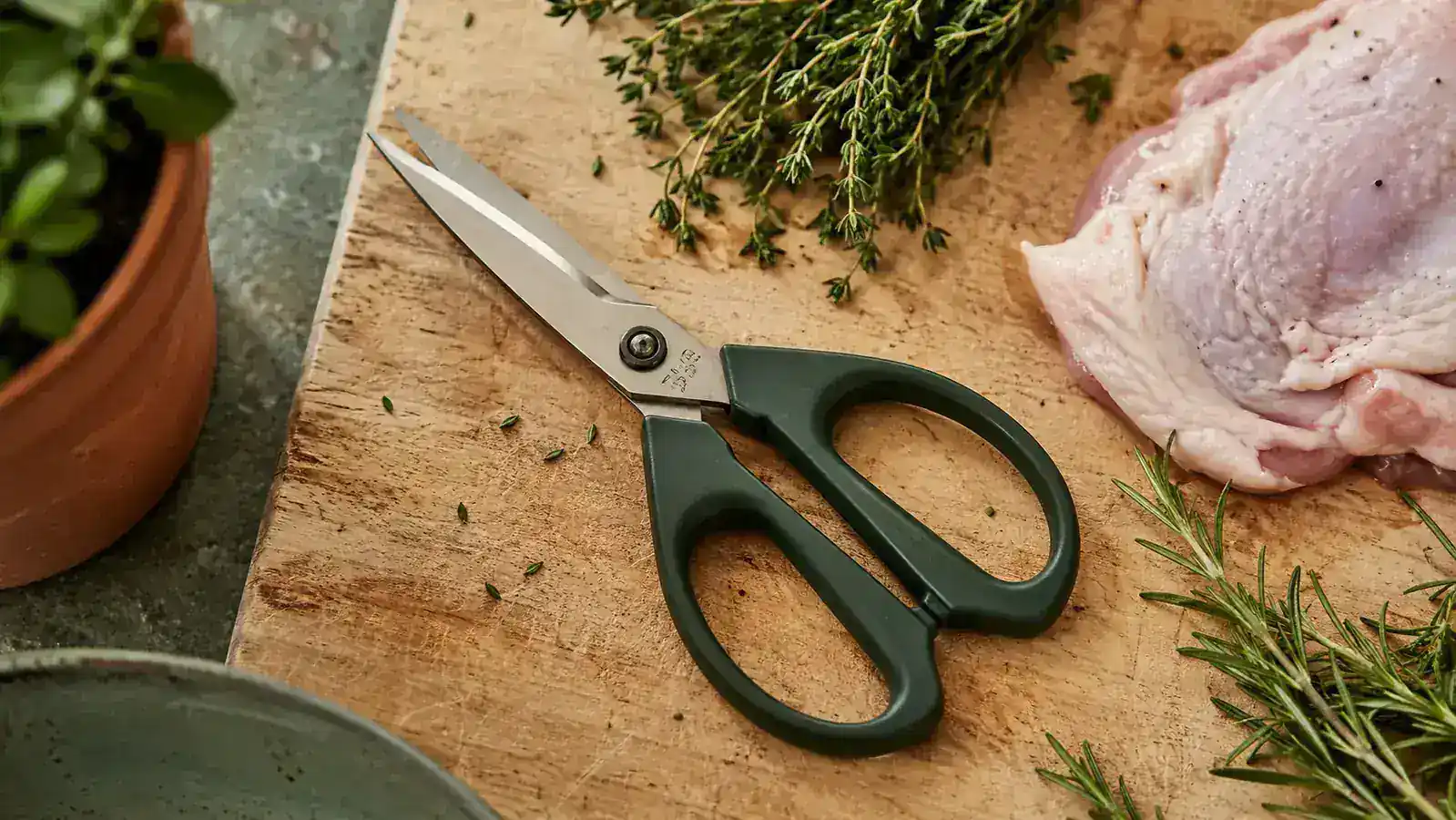
About fourteen months ago I cleared out my knife block and made myself a rule: no tool stays in this kitchen unless it earns its spot. The Gidli kitchen shears almost didn't make the cut. I bought them mostly to trim herbs without dragging out a cutting board, and I figured they'd end up in the back of a drawer by spring. They didn't. I have used them on raw chicken, pizza fresh from the oven, fresh herbs, dried pasta, packaging, and more herb bundles than I can count. At this point they are the first thing I grab when I'm standing at the counter figuring out what's for dinner.
This review covers a full year of that kind of daily use. Not occasional snipping, not a few test cuts. I'm talking every-night cooking for two adults, a lot of chicken, and a herbs-from-the-garden phase in late summer that had me using these shears four or five times a week. Here is what I found.
The Quick Verdict
Sharp out of the box, still plenty sharp a year later, and easy enough to clean that I actually do it every time. The handle comfort could be better for large hands, but at this price they outperform shears costing twice as much.
Amazon Check Today's Price →If your current shears are tugging instead of cutting, these are worth a look.
The Gidli kitchen shears come with a lifetime replacement warranty and include a bonus pair of seafood scissors. Thousands of home cooks have made them a permanent drawer fixture.
Amazon Check Today's Price on Amazon →How I've Used These Shears Over the Past Year
I want to be specific about usage because 'I use them a lot' is meaningless for a review. In the first six months I used the Gidli shears primarily for herbs, including thyme, rosemary, scallions, and parsley straight from the garden, plus cutting dried pasta to fit the pot and opening stubborn vacuum-sealed packaging. That is light-to-moderate use by any standard, and honestly they could have been mediocre shears and survived that test just fine.
The real test started around month seven when I committed to cooking chicken at least four nights a week and stopped reaching for my cleaver. I started using the shears to spatchcock whole chickens, trim fat and skin from bone-in thighs, and cut through breastbone cartilage on smaller birds. That is where cheap shears fail fast. The Gidli blades held up without any noticeable dulling through that stretch, which genuinely surprised me.
By month ten I was also using them regularly to cut pizza directly on a wooden serving board, which is something a lot of reviewers never mention but I do at least twice a week. Cutting pizza with shears is faster and cleaner than a wheel rolling across a wooden surface, and there is no disc to wash. The blades show some micro-scratching from that habit, but it has not affected cutting performance one bit.
Blade Sharpness: Out of the Box and After 12 Months
Out of the box, the Gidli shears were genuinely sharp. I cut a folded paper towel on the first day and got a clean edge with no tearing. That is not a demanding test, but a lot of shears in this price range fail it. The blades are stainless steel with a micro-serration on one blade that helps grip slippery skin and plastic packaging without the material sliding away from the cutting edge.
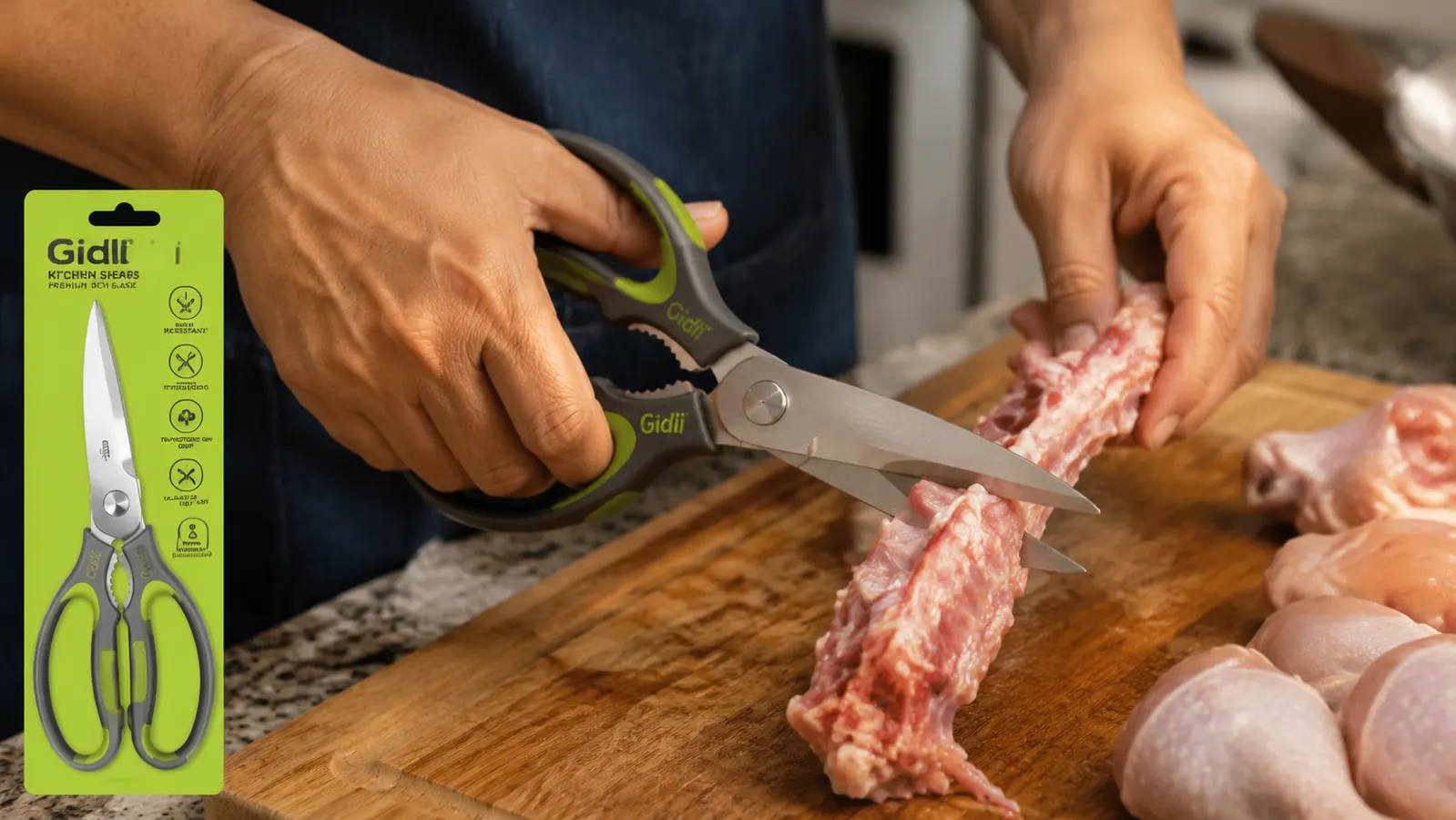
After twelve months of the use I described above, I'd put them at about 80 percent of their original sharpness. They still cut cleanly through fresh herbs and cartilage, but I noticed in month eleven that trimming thicker chicken skin sometimes took a second snip instead of one clean cut. That is normal wear for any non-ceramic blade at this price point, and the lifetime replacement warranty means you are not stuck when the edge eventually degrades beyond what is acceptable.
One thing I did not expect: the serrated blade is a real practical advantage, not just a marketing feature. When I am trying to cut through the thick plastic seal on a rotisserie chicken package or get into a vacuum-sealed bag of frozen shrimp, the serration catches and cuts where a plain blade would just slide across the surface. It is a small thing, but I notice it every single time I reach for a sealed package.
By month seven I was spatchcocking whole chickens with these shears. Not once did I wish I had something heavier.
Handle Comfort and Grip: Where They're Good and Where They Fall Short
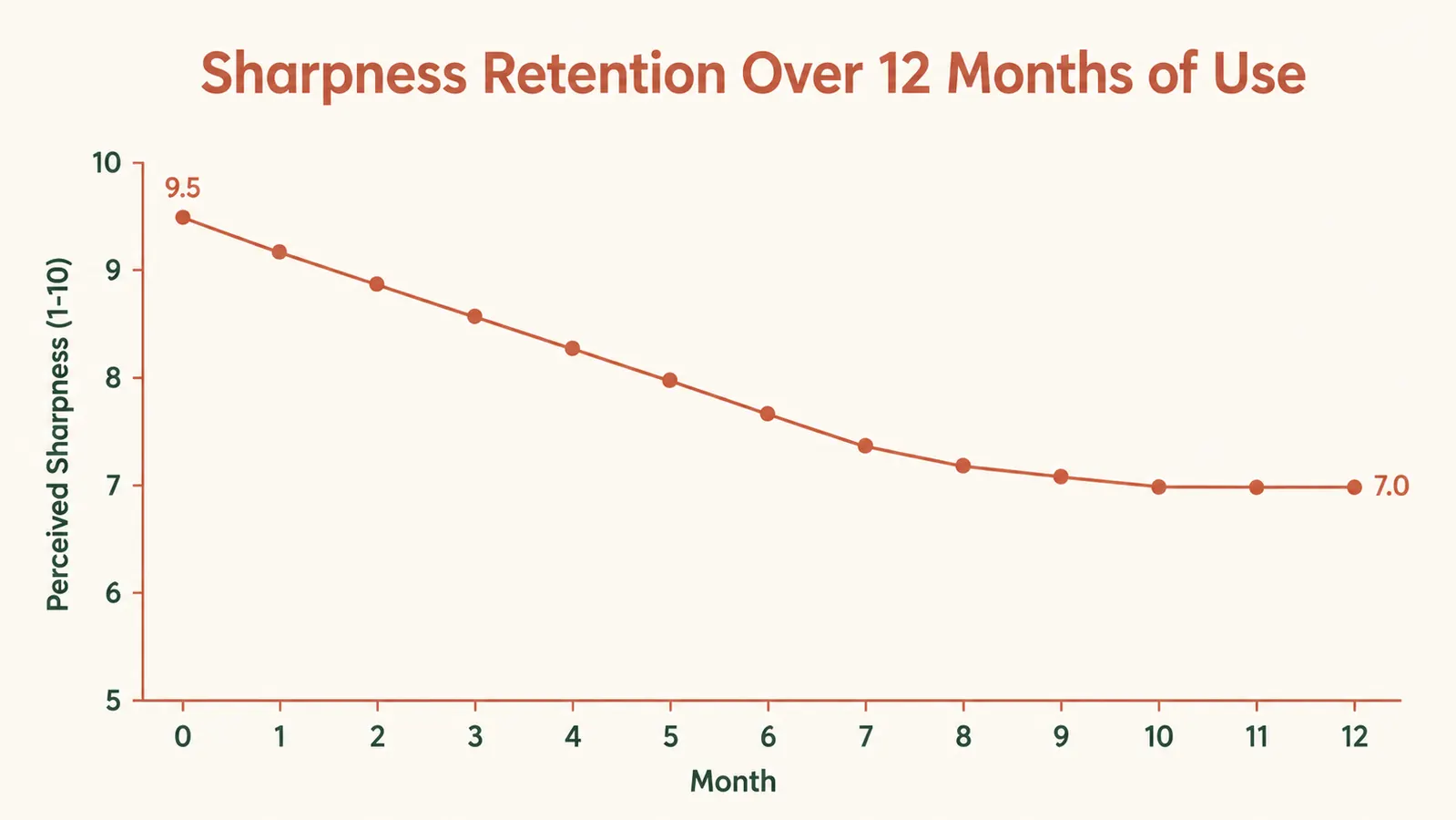
The handles are the part of the Gidli shears I have the most mixed feelings about. They are a molded composite grip with a slight soft-touch coating, and they feel secure and comfortable for the first ten or fifteen minutes of use. My hands are medium-sized and I cook without hand pain, so take this with that context in mind. When I asked my husband, who has large hands and some arthritis in his right index finger, to use them on a full chicken-trimming session, he said after about five minutes that the grip started to feel tight across the palm.
For most tasks, the handles work fine. Snipping herbs, cutting pizza, opening packages: none of that puts enough sustained pressure on the palm for comfort to become a real issue. Prolonged chicken work is the exception. If you have large hands or any grip strength concerns, I'd pay close attention to that before buying. For everyone else, and that is most people buying kitchen shears, you won't notice a problem during a normal cooking session.
The safety lock on the handle is a simple clip mechanism that keeps the blades closed in storage. It works reliably and I have never had it accidentally open in the drawer, which is genuinely my main concern with any shears I keep loose in a kitchen drawer rather than on a magnetic strip or in a dedicated slot. A shear blade opening in a crowded drawer is a hazard that doesn't get enough attention in most reviews.
Disassembly and Cleaning: The Part That Makes or Breaks a Kitchen Shear
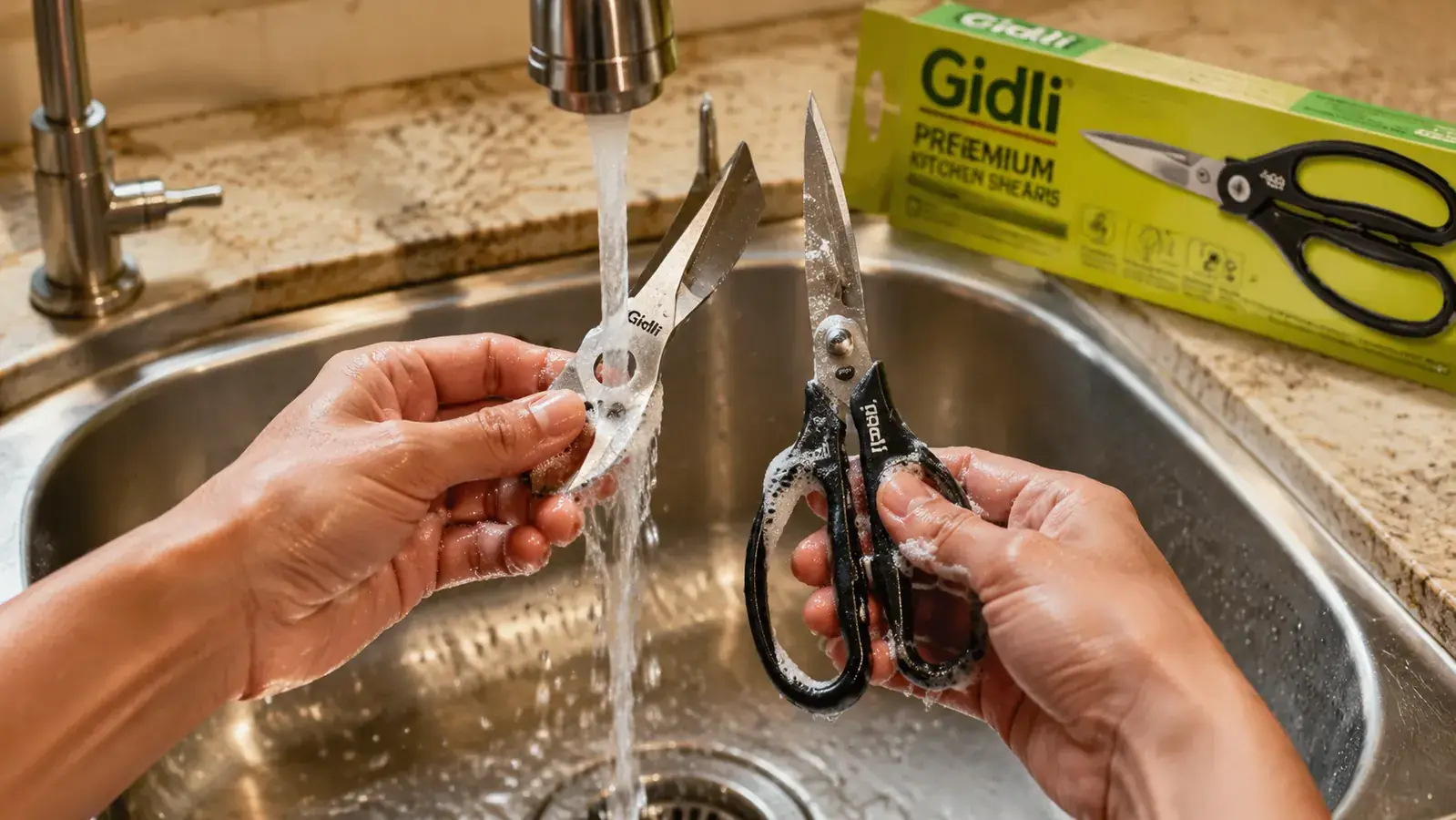
Here is something I have learned from owning several pairs of kitchen shears over the years: the ones that don't come apart are the ones that get gross and eventually get thrown out. Bacteria can build up in the pivot joint, especially after cutting raw poultry, and no amount of surface rinsing fixes that problem. The Gidli shears pull apart at the pivot point with a simple squeeze-and-slide motion. Takes about two seconds once you've done it a few times. Both blades wash flat under running water and go directly into the dish rack.
I have washed these shears this way after every single raw chicken session for the past year and the pivot joint still feels tight and smooth. No wobble, no loosening, no feeling that repeated assembly and disassembly has worn anything down. That sounds like a low bar but I have owned shears where the pivot got noticeably loose after six months of frequent disassembly. These have not had that problem.
They are technically dishwasher safe according to the packaging, but I hand wash them exclusively because I have seen too many dishwasher cycles degrade blade steel faster than hand washing would. If you are someone who puts everything in the dishwasher, they should hold up fine. My recommendation is to hand wash when you can, especially after raw meat.
The Bonus Seafood Scissors: Useful or Just a Gimmick?
The Gidli shears come packaged with a smaller pair of seafood scissors. I'll be honest: I didn't expect to use them. I am not a frequent seafood cook and the scissors looked like an afterthought when I first pulled them out of the box. I was wrong about that.
Over the year I've used the seafood scissors to devein shrimp, trim fins off fresh whole fish before roasting, and cut through crab leg shells right at the table. They are lightweight and genuinely sharp, and the curved tip is well-suited for getting into tight spots around shells and joints. They are not a replacement for the main shears, but as a specialized bonus tool they earn their drawer space without any argument from me. If you cook any seafood at home, you will actually use them.
How They Compare to What I Used Before
Before the Gidli shears, I owned a pair of Wusthof kitchen shears that retail for considerably more. The Wusthof blades were marginally sharper at the very start and the handles are more comfortable for large hands over extended use. But when I worked through the same chicken prep tasks with both pairs side by side, the real-world performance difference was hard to notice. I could cut through a whole chicken backbone with both pairs in the same number of snips. The Wusthof also did not include seafood scissors. Whether the handle comfort difference alone justifies paying three times more is a personal call, but for most home cooks I don't think the math works.
I also tried a generic no-brand pair from a big-box store at the budget end before settling on the Gidli. Those failed at the pivot after about four months of real use and the blades were tugging at fresh herbs instead of cutting cleanly by month three. The Gidli shears at their current price sit in a sweet spot: substantially better than budget options, and close enough to premium options that the price gap becomes very hard to justify.
What I Liked
- Blades stayed sharp through 12 months of heavy chicken, herb, and pizza use
- Disassemble in seconds for proper cleaning after raw poultry, no tools required
- Micro-serration on one blade grips slippery skin and plastic packaging reliably
- Lifetime replacement warranty reduces the long-term financial risk of the purchase
- Seafood scissors are a practical bonus that sees real use, not just packaging filler
- Safety lock works consistently and stays closed in a crowded drawer
Where It Falls Short
- Handle grip can feel tight across the palm after extended chicken-trimming sessions, particularly for large hands
- Blades show light micro-scratching after repeated pizza cutting on wood surfaces
- Sharpness has declined noticeably (roughly 20 percent) after a full year of heavy daily use

Who These Shears Are For
The Gidli kitchen shears are the right buy for a home cook who reaches for a tool every single night and wants it to still be performing well a year later without spending premium money. If you make chicken regularly, grow or buy fresh herbs, cut pizza at home, or open a lot of vacuum-sealed packaging, these will earn their drawer space fast. They are also a good pick for anyone who takes food safety seriously, because the disassembly design makes thorough cleaning easy enough that you will actually do it every time. If you are still deciding whether shears even belong in your prep routine, I'd suggest reading the side-by-side I put together on kitchen shears versus a knife for food prep to see where each tool wins.
Who Should Skip Them
If you have large hands, grip strength issues, or regularly cook seafood-heavy meals that require shears to work hard for long stretches, I'd recommend trying them in a store if you can before committing, or at least accepting that the handles may not be a perfect fit for your hand size. If you want the absolute best blades available and cook at a near-professional level, the Wusthof or Joyce Chen shears at higher price points do offer a meaningful step up in handle ergonomics and blade longevity. For the majority of home cooks making real weeknight food, those edge cases won't apply. Also worth a look before you decide: 10 reasons kitchen shears speed up cooking more than most people expect, which walks through specific prep tasks where shears genuinely beat the knife every time.
A year in, I'd buy these again without hesitating.
The Gidli kitchen shears are still a daily fixture in my kitchen after 12 months of heavy use. Sharp, easy to clean, backed by a lifetime replacement warranty, and they include seafood scissors at no extra cost. Check today's price on Amazon before it changes.
Amazon Check Today's Price on Amazon →